By Mohamad Jamous | September 2026
Sometimes peacebuilding happens in conference rooms, around carefully arranged tables, with prepared speeches and scheduled conversations.
And sometimes, it begins on a road where stones are being thrown at your car.
That was how our journey to Qusra began.
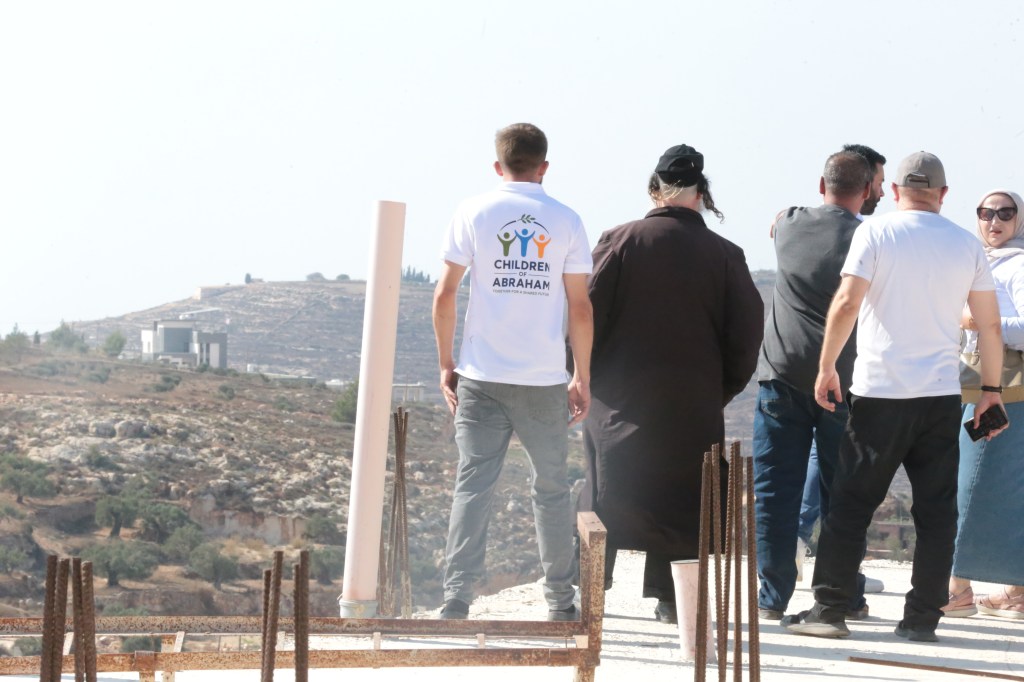
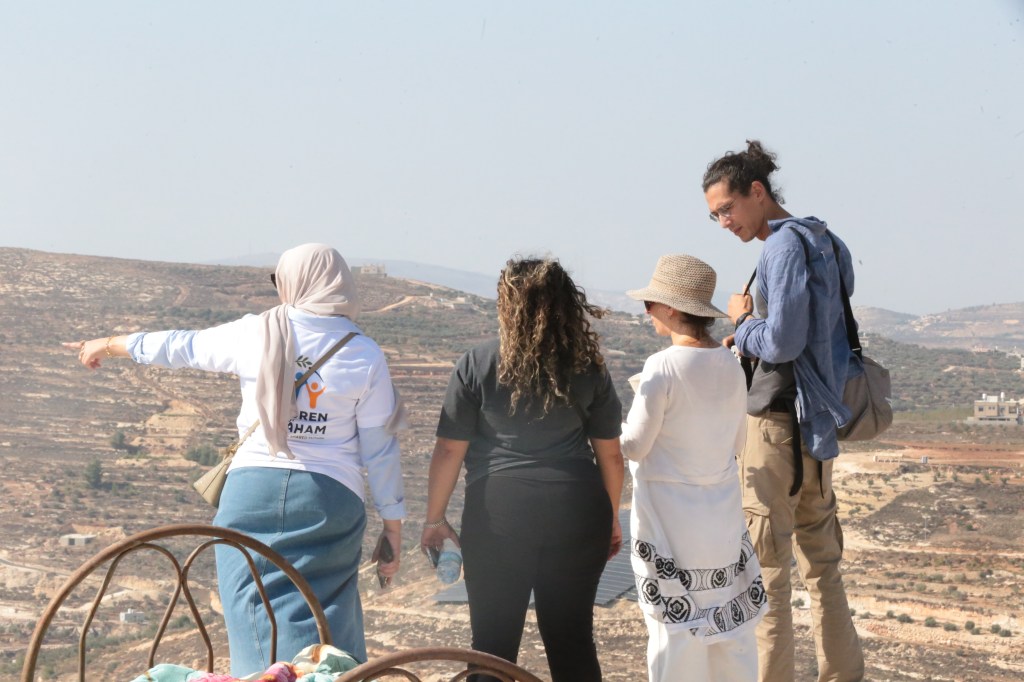
We were a group of Palestinians and Israelis, Muslims and Jews, peacebuilders and faith leaders, traveling together to the Palestinian village of Qusra, south of Nablus. We were not going there for a conference or a symbolic photo. We were going as a peaceful civilian protective presence and to stand in solidarity with families living under continuous pressure and fear.
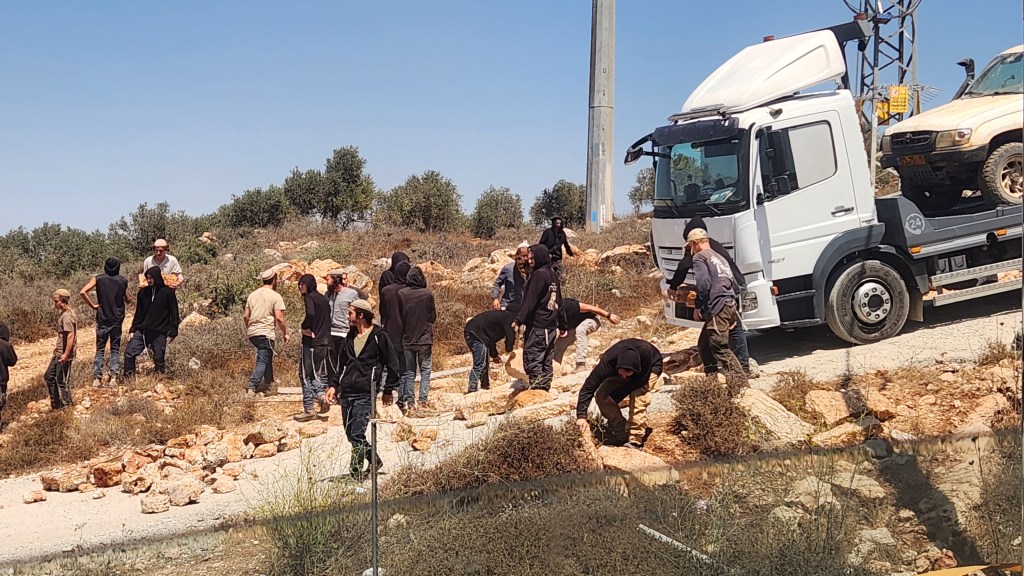
Around 200 meters before reaching the village, the reality we had come to confront met us directly.
Stones were thrown at vehicles in our group by Israeli settlers along the road. For a moment, the danger was no longer something we had heard about from Qusra’s residents. We were experiencing a small part of it ourselves.
But we continued.
Entering Qusra
When we arrived, representatives of the village welcomed us and explained what residents have been living through. We heard about repeated settler attacks, restrictions on movement, damage to property and infrastructure, and families living in particularly vulnerable areas near the edges of the village.
These were not statistics on a screen.
They were people’s homes, roads, water, electricity, children, parents, and daily lives.
For me, one of the most important aspects of that day was who had chosen to come.
Palestinians were not standing alone. Israeli Jews, including religious Jews, had crossed physical and psychological lines to be there. Muslim and Jewish religious leaders stood together and made clear that violence against civilians cannot be justified by religion, identity, fear, or politics.
In a reality where Palestinians and Israelis are increasingly taught to see one another only through conflict, simply standing together carried meaning.
But we wanted to do more than stand.
From Solidarity to Human Connection
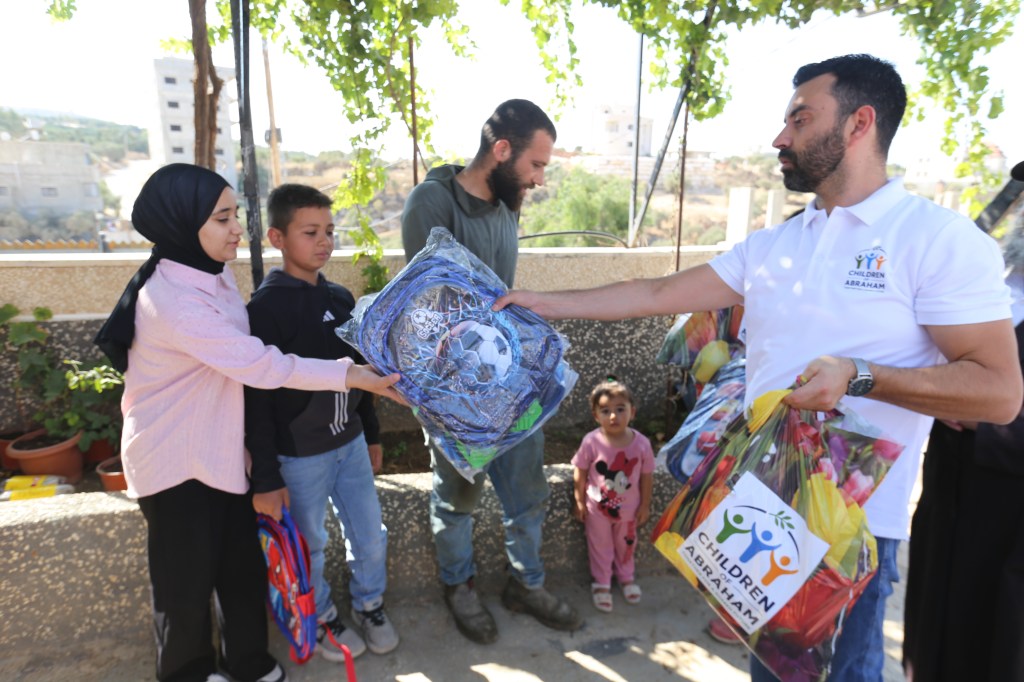
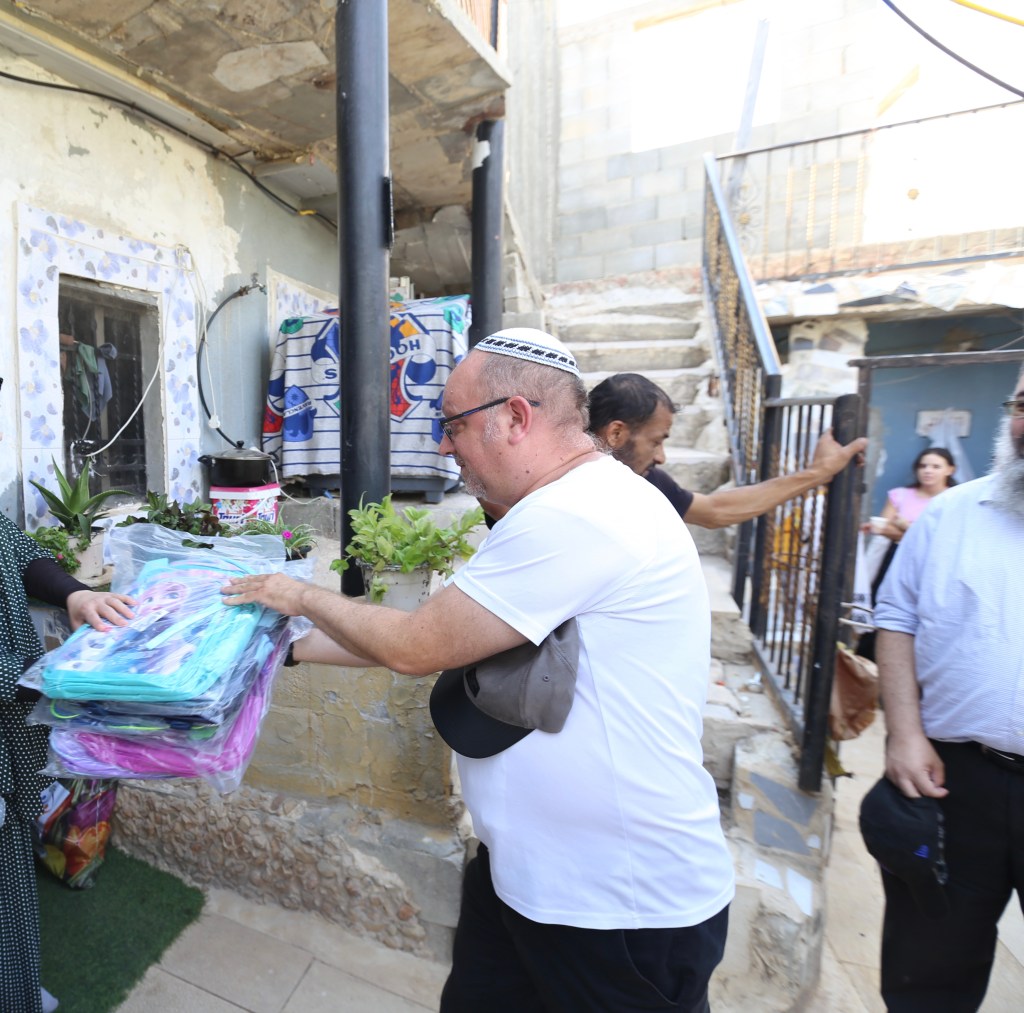
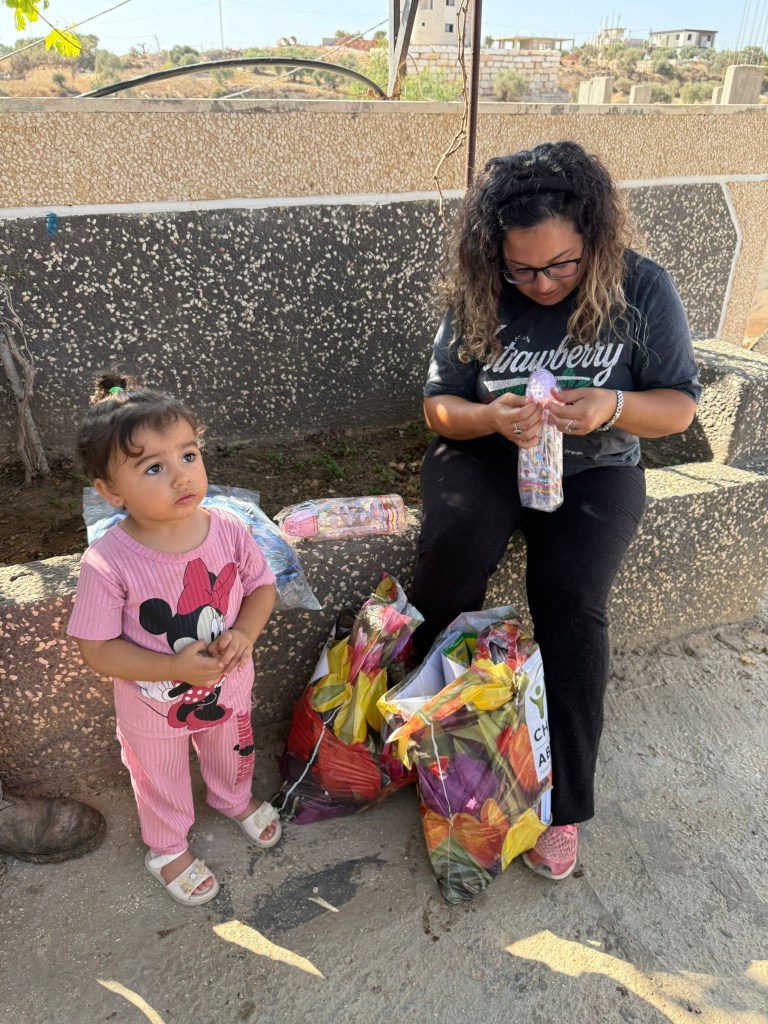
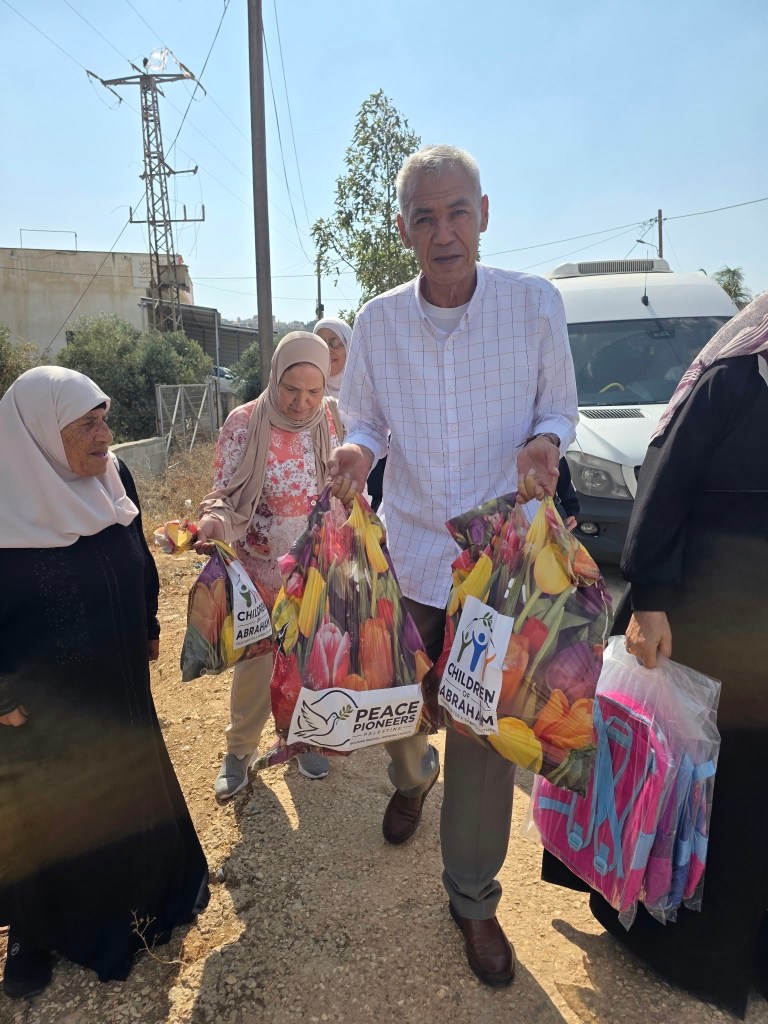
We divided into groups and visited families in the village, bringing humanitarian support and school supplies and, more importantly, spending time listening.
Protective presence does not mean arriving as heroes. It means showing people that they have not been forgotten.
It means using our presence, our relationships, and whatever access we have to help create a little more space for safety and human dignity.
Our intention was also to reach several particularly vulnerable homes in the Ras al-Ain area. We were unable to reach them directly that day because of the situation on the ground. We stopped roughly 300 meters away.
That distance stayed with me.
Three hundred meters sounds insignificant almost anywhere else. But in a place shaped by fear, restrictions, and violence, a few hundred meters can separate a family from the people trying to stand beside them.
Mahmoud’s Choice
One of the most powerful moments of the day came through our local partner and longtime peace activist, Mahmoud Odeh.
Mahmoud knows the cost of this conflict in the most personal way possible.
His younger brother, Muath, was killed in October 2023 during a settler attack. He was only 21 years old. According to Mahmoud, Muath had gone to help a five-year-old girl when he was shot.
Mahmoud had every reason to allow grief to become hatred.
Instead, he continues to choose dialogue.
Sitting with him and seeing Palestinians and Israelis gathered together in his community reminded me of something I have learned repeatedly during more than a decade of peacebuilding: peace is not made by people who have never experienced pain.
Often, it is made by people who have experienced pain and still refuse to pass it on to someone else.
That is a much harder form of courage.
Peacebuilding Cannot Exist Only in Safe Places
For years, I have participated in dialogue programs, interfaith gatherings, international conferences, youth programs, and meetings between Palestinians and Israelis.
I believe deeply in those spaces.
But dialogue loses meaning if it cannot survive contact with reality.
If we can sit together in Jerusalem, Tel Aviv, Ramallah, Europe, or the United States, then we must also be willing to stand together when a Palestinian family feels isolated and afraid.
Peacebuilding cannot exist only in hotels, conference halls, or carefully protected meeting spaces.
It must sometimes walk into the places where trust has collapsed.
That is what Qusra represented for me.
The Israeli participants who came with us did not come to defend a government or justify an occupation. The Palestinians who welcomed them were not being asked to abandon their rights or their story.
We came together around something much simpler:
Civilians deserve safety. Human dignity is not conditional. And violence against innocent people must never become normal.
Crossing the Lines
There are many lines between Palestinians and Israelis.
Some are drawn on maps. Others are created by checkpoints, settlements, walls, fear, trauma, politics, religion, and decades of bloodshed.
But there are also lines inside our minds: places we are told not to enter, people we are told not to trust, and stories we are told not to hear.
On that day in Qusra, a small group of people crossed some of those lines.
We did not solve the conflict.
We did not remove the dangers surrounding the village.
And I would never pretend that one solidarity visit can transform the reality families there face.
But something important happened.
When Palestinians facing violence saw Israeli Jews standing beside them and rejecting that violence, another possibility became visible.
When Jewish participants entered a Palestinian community, listened directly to residents, met families, and heard their experiences without filters, another possibility became visible too.
That is where I believe peacebuilding begins—not by pretending that our realities are equal or our disagreements do not exist, but by refusing to let those disagreements erase each other’s humanity.
Qusra reminded me why I continue doing this work.
Not because peace is easy.
Not because dialogue alone is enough.
But because when fear tells us to move farther apart, someone has to be willing to cross the lines.
And sometimes, peace begins with the people who decide to cross them together.
Mohamad Jamous

 Mohamad Jamous